
To get your product into Target, fill in Target’s Supplier Intake Form: Target says it has no separate applications for its accelerator programs, and its team reaches out when a brand fits. Target also scouts brands at discovery days twice a year, and Target.com’s Target Plus marketplace has its own application. After a buyer’s yes, expect 6 to 9 months before the shelf.
To get your product into Target, you start with one form: Target’s Supplier Intake Form. Target says it has no separate application for its accelerator programs; its team reaches out when a brand looks like a fit. I read Target’s supplier pages and its accelerator team’s guidance on 11 November 2026, and this is what they say, in the order a founder meets it. If you’re still deciding whether a national chain should be your first retailer, start with our founder’s guide to getting into retail stores.
Target’s own advice is blunt: mass retail should not be your first step.
How do you become a Target vendor?
Target’s suppliers page offers three doors: your brand’s products in Target, services or private label, and Target.com through Target Plus. For products, the door is the intake form. Target says its internal teams then work out “how we can best support your business,” including whether you fit Target Accelerators, and its mass retail readiness guide calls filling the form in accurately “critical”. Treat it as your first pitch.
- No guarantee. Target’s accelerator FAQ says submitting “does not guarantee business with Target.”
- Expect silence unless there’s a fit. Target says its team will reach out if it identifies a strategic fit.
- Resubmit as you grow, Target says, “with every milestone you hit.”
- U.S. companies only, for now. Target Accelerators is “not currently supporting companies that are located internationally.”
How does Target find new brands?
Through the form, and more and more through events. Target’s fact sheet on emerging brands, updated in August 2026, says it hosts discovery events “twice per year across categories.”
- Food & Beverage Discovery Day, 16 July 2026: 57 startups at Target’s Minneapolis headquarters, the Minnesota Star Tribune reported. “This is one of the ways we build the pipeline,” said John Conlin, Target’s senior vice president of food and beverage merchandising.
- Essentials & Beauty Discovery Day, 12 November 2026: listed for Minneapolis on Target Accelerators’ events page.
- Trade shows, brokers and distributors: Warren Wilson, a Target Accelerators founder in residence and co-founder of Bagelista, lists all three as ways to reach buyers in Target’s wholesale guide.
What does Target look for before it says yes?
The readiness guide says “retailers want to see proof that your product can succeed” and asks founders to check four things first:
- Proven sales through your own site or smaller retailers; regional stores are a good place to test.
- Digital presence: “an engaged online audience on social media platforms” and an email community.
- Buzz: press, awards or excitement that “signals consumer interest.”
- Cash to wait: money for manufacturing, packaging and marketing, payment terms of 60 to 90 days, and fees such as promotional allowances, markdowns or slotting fees.
In June 2026 Adam Gregory, in Target’s merchandising team since 2014, described the signals buyers look for when they say yes: a clear reason to exist, specifics such as “we produce X units per week”, pricing the founder can explain, packaging that sells with nobody beside it, and flexibility on case packs. He lists “proven demand or early velocity” among them, and notes that discovery happens “across social and video platforms, where emerging brands often gain their first traction.”
How hard is it to get a product into Target?
Hard, by Target’s own account. Wilson writes that buyers “are approached by hundreds of brands every day, but in a particular category there may only be a handful of open spots for new products every year,” and suggests winning smaller regional retailers first. The counterweight: Conlin told the Star Tribune that Target had launched hundreds of brands in a few months, and called them “the biggest contributor to recent growth.” The shelf is crowded, but Target is looking.
What are Target’s vendor requirements?
Target’s suppliers page asks every vendor to commit to:
- Its Rules of Use, audit program and Standards of Vendor Engagement
- Its Product Safety & Quality Assurance approach and Business Partner Code of Conduct
- Electronic Funds Transfer with Accounts Payable, required for domestic vendors
- The ability to use EDI to receive purchase orders
- A certificate of insurance, plus eligibility checks if you want to drop ship
EDI and insurance catch most small brands out; our guide to UPC barcodes, EDI and chargebacks explains both. This summarizes Target’s published list and is not legal or insurance advice.
Are Target Takeoff and Forward Founders a way in?
Not a separate one. Target Accelerators’ FAQ is plain: “We don’t have applications.” Target Takeoff “supports brands already selected by Target for placement in-store or online,” so the order is form, merchant, then Takeoff. More than 150 brands have been through it since 2017, with coaching for up to 2 years after launch; the Summer 2026 cohort was 10 brands over 9 weeks. Forward Founders isn’t on Target’s programs page as of November 2026; its most recent announced cohort, in October 2025, came through partner groups. Our guide to retail accelerator programs compares the alternatives.
Can you sell on Target.com without being in stores?
Yes, through Target Plus, Target’s curated third-party marketplace. Target calls it invite-only, but it takes applications and aims to reply within 30 days.
- Eligibility: a U.S.-registered business with a W-9, EIN and DUNS number.
- Model: one seller per SKU, no SKU minimum, your own pricing and promotions.
- Cost: no monthly fee, a referral fee Target doesn’t publish, and your own shipping, returns and fulfillment.
- Timing: typically 3 to 6 weeks before onboarding starts.
How long does it take to get into Target?
In Target’s wholesale guide, Wilson puts the gap between a buyer’s yes and the shelf at 6 to 9 months:
- Award of business. The buyer confirms Target will carry the product.
- Item setup. You confirm how you will produce and fulfill orders on time.
- Purchase order. It arrives a few weeks before launch.
- Reset date. The product goes live in stores.
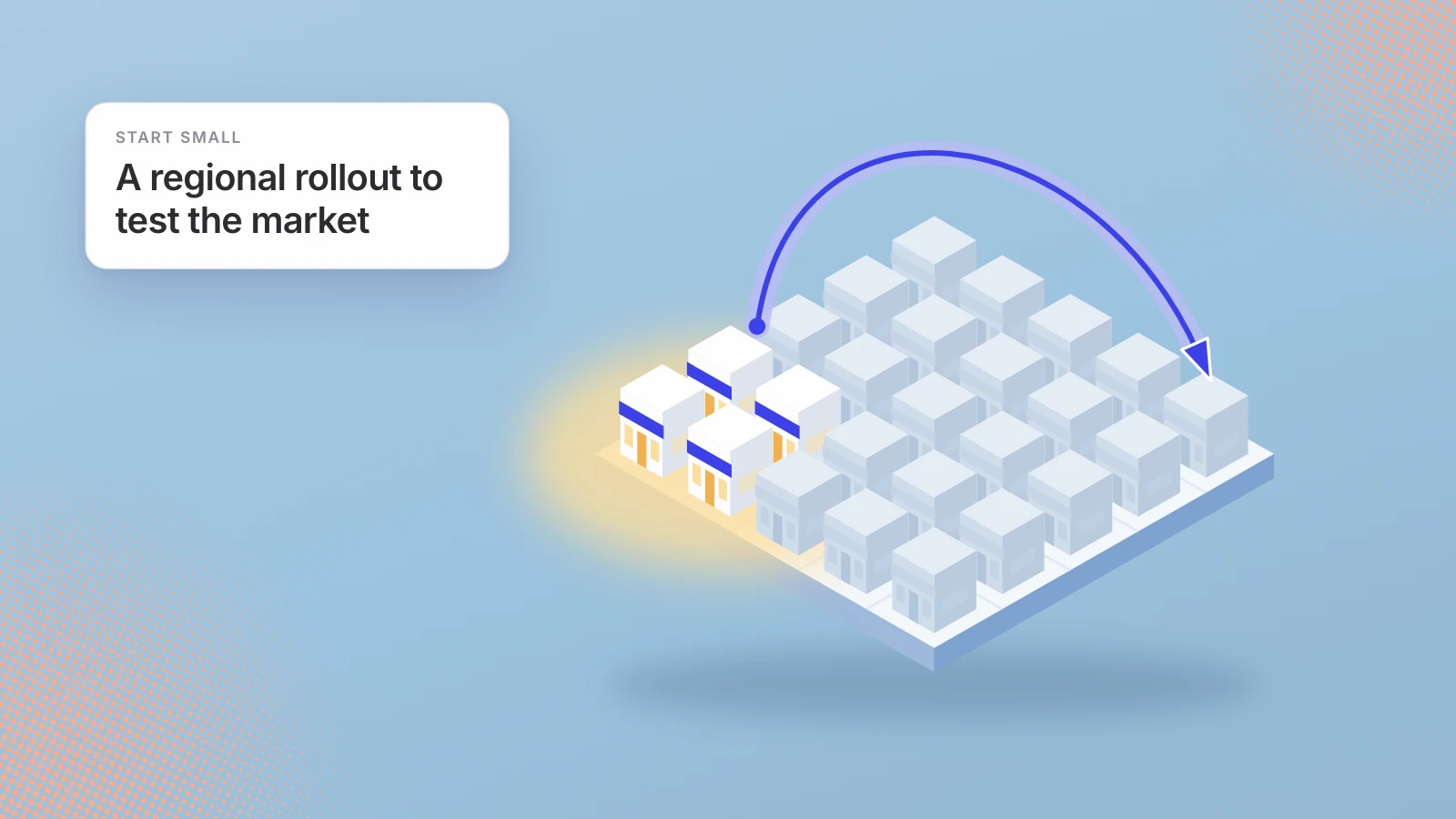
Nothing is published for the time before the yes. For a first launch, Jennifer Ray-Jones, Director of Target Accelerators, suggests starting “small with a regional rollout to test the market.”
Who markets your product once it’s at Target?
Mostly you. Wilson again: “Velocity or units sold on the shelf just doesn’t happen after appearing at a retailer. You have to nurture and invest in marketing to get that awareness for your brand.” A broker I spoke with this spring added that buyers scroll a brand’s feed, and its customers’ posts, for demand that already exists; what retail buyers look for on your social media has that conversation, and our 90-day launch marketing plan covers the weeks around your reset.
Here is where we have a stake. Leo AI doesn’t sell to Target or know its buyers. Leo for consumer brands turns footage you already own, from product demos to founder talks, into captioned daily posts, and runs creator campaigns that look for creators whose followers match your buyers: 124 found and 17 yeses in FitCommit’s campaign, with 1.43 million combined followers. Our launch studio cuts a 30 to 45 second launch video from your footage for $500 in 5 working days. None of it replaces a margin that works at Target’s prices.
What to do this month
- Score yourself against Target’s checklist. No sales outside your own site yet? Win a regional retailer first.
- Write the intake form like a pitch. Real numbers, the products you would launch first, and the door you want: stores, Target Plus, or both.
- Make demand visible, then resubmit. Every new retailer, sales record or press mention is a reason to send the form again.
The one item on Target’s checklist you can start without anyone’s permission is the audience. Tell us who buys from you and we’ll show you the creators they already follow, and what your existing footage could be posting while the form does its work.
The form gets you seen. Proof of demand gives a merchant a reason to call.
Sources
- Target, Suppliers
- Target, Supplier Intake Form
- Target Accelerators, Frequently asked questions
- Target Accelerators, Mass retail readiness: what every startup founder should consider
- Target Accelerators, Signals buyers look for when they say yes
- Target Accelerators, Navigating wholesale partnerships as a small business
- Target, How Target supports emerging businesses and founders
- The Minnesota Star Tribune, Target leans into emerging food and drink brands
- Target Accelerators, Events
- Target Accelerators, Target Takeoff
- Target Accelerators, Programs
- Target Accelerators, Meet the Target Takeoff Summer 2026 cohort
- Target Accelerators, Meet Target Forward Founders 2025
- Target Plus, A curated marketplace for growth
Written by Lera Leonteva. Leo AI makes social video and runs creator campaigns for consumer brands, so we have a commercial interest in the marketing part of this guide. We have no relationship with Target. Target facts are from Target’s own pages, read 11 November 2026, plus one Minnesota Star Tribune report.