
Retail accelerator programs are retailer-run courses that prepare emerging brands for the shelf, often with mentors, money or a pitch to merchants. As of November 2026, Sephora Accelerate, Ulta Beauty’s MUSE, Whole Foods Market’s LEAP and USBC 360 with Target ran 2026 cohorts; Target Takeoff is by invitation; Kroger’s Go Fresh & Local shows no cohort since 2022.
A retail accelerator program is a retailer’s own course for emerging brands: a cohort, a curriculum, mentors from the buying side and, sometimes, money or a shot at the shelf. None of them guarantees a listing. I checked each program on its own pages on 11 November 2026, kept only those I could confirm, and marked the ones that look paused. For the wider route, start with our founder’s guide to getting into retail stores.
Most of these programs pick brands that can already show demand. Apply when you can prove yours.
Which retail accelerator programs are open in 2026?
The table covers 10 programs and open calls, and the last window each one published:
| Program | Who it is for | What you get | Last window, status |
|---|---|---|---|
| Target Takeoff | CPG brands Target has already chosen for stores or Target.com | Months of curriculum and mentors; coaching for up to 2 years after launch | No application; starts with Target’s intake form. Summer 2026 cohort named 5 November |
| Target Forward Founders | Earlier-stage CPG founders | An 8-week course in 2025 | Last cohort October 2025, via partners; not on Target’s programs page |
| USBC 360, with Target | U.S. CPG brands with $100,000+ revenue and a year of sales | 12 free weeks, travel stipends, a $100,000 grant pool with awards of up to $50,000 | Opened 20 April 2026 for about 6 weeks; first cohort August to October |
| Walmart Open Call | Products made, grown or assembled in the U.S. | A 30-minute merchant pitch; 54 golden tickets in 2026 | 9 July to 3 August 2026 |
| Walmart Start | Beauty brands able to supply a potential 1,000-store launch | Classes, a brand consultant, merchant mentors, Walmart.com marketing | 2026 class closed 18 April 2025; no newer window posted |
| Sephora Accelerate | Early-stage North American beauty brands, not widely distributed | Curriculum, one-to-one mentoring, a shot at a $100,000 grant | 2 to 31 March 2026; 12 brands named 21 July |
| Ulta Beauty MUSE Accelerator | Early-stage beauty brands already selling, in the U.S. or Canada | $50,000, 10 weeks of curriculum, a pitch to Ulta merchants | Closed; 2026 cohort began 14 September |
| Whole Foods Market LEAP | Emerging brands not yet sold at Whole Foods | 12 weeks of mentoring, regional shelf consideration, a possible $25,000 equity investment | Opened 2 June 2026; 10 brands named 24 September |
| Kroger Go Fresh & Local | Fresh local and regional producers | A pitch competition; 2022 winners got shelf placement | No cohort found since 2022 |
| Home Depot Orange Exchange | U.S. small-business merchandise suppliers | Pitch sessions with merchants on 18 February 2027 | Open until 15 December 2026 |
How do you get into Target Takeoff or Forward Founders?
Through Target’s Supplier Intake Form; neither program takes its own applications. The Takeoff page says the program “supports brands already selected by Target for placement in-store or online,” and Target’s fact sheet counts more than 150 brands since 2017. Forward Founders is murkier. A Target spokesman told CNBC in February 2025 it would run twice a year; its most recent announced cohort came through partner groups in October 2025, and Target’s programs page now lists only Takeoff. Target also backs USBC 360, run by the U.S. Black Chambers. How to get your product into Target covers the intake form.
What are Walmart Start and Walmart Open Call?
Walmart Start is Walmart’s beauty accelerator: classes, a brand management consultant, mentoring from Walmart merchants, and Walmart.com campaigns for brands selected to launch. Walmart says applicants should be able to support a potential launch in 1,000 stores and carry at least $5 million in liability insurance. Its last posted window, for the 2026 class, closed on 18 April 2025, and Walmart said then that the program had launched more than 10 brands; no newer window was posted by November 2026. Open Call is broader: most categories, for products made, grown or assembled in the U.S., with a 30-minute pitch to a merchant. Our Walmart Open Call guide has the 2026 dates and a prep plan.
When does Sephora Accelerate open applications?
In 2026 it was 2 to 31 March, according to Sephora’s FAQ, with decisions by summer and a fall kickoff; Sephora named 12 brands on 21 July. It is for early-stage beauty brands incorporated in North America, not yet widely distributed, with at least a working prototype or lab sample. Founders get a curriculum, one-to-one mentoring and the chance to apply for a $100,000 Sephora Beauty Grant. A launch isn’t promised, but Sephora says more than half of its 41 graduates have launched with it. 2027 dates weren’t announced as of November 2026. Our Sephora guide covers the regular route.
How do you apply to the Ulta MUSE Accelerator?
Through Ulta’s online form, once a year. The 2026 cohort of 8 brands started on 14 September, and Ulta’s MUSE page now says to check back next year for the 2027 cohort. Each brand gets $50,000, a 10-week curriculum and a Demo Week pitch to Ulta merchants, per Ulta’s announcement. Beauty Independent reported that Ulta generally looks for brands that have “generated revenue, demonstrated direct-to-consumer traction and begun developing a community,” and that every graduate can now join Ulta’s invite-only UB Marketplace.
What is Whole Foods’ Local and Emerging Accelerator Program?
LEAP is for emerging brands not yet sold at Whole Foods Market. Applications for the 2026 Early Growth cohort opened on 2 June, and 10 brands, chosen from more than 2,000 applications, were named on 24 September. They get a 12-week curriculum and mentors, can qualify for a $25,000 equity investment, and are considered for shelves in their home region afterwards. Whole Foods says 9 of the 10 brands in its 2025 cohort are on its shelves, with the tenth launching in November.
Is Kroger Go Fresh & Local still running?
Not that I could find. Kroger ran the Go Fresh & Local Supplier Accelerator for fresh local and regional products in 2021 and 2022, and its 2022 winners got shelf placement in stores and online plus coaching. Kroger’s program page still invites applications but shows the 2022 winners and no dates, and I found no cohort announced since. Treat it as paused until Kroger posts a date.
Is any retail program taking applications right now?
Yes. The Home Depot’s Orange Exchange, an open call for U.S. small-business merchandise suppliers, takes applications until 15 December 2026 for pitch sessions with its merchants on 18 February 2027. Home Depot says it assesses market readiness, production capacity, fulfillment and innovation.
Which retail accelerator should you apply to?
- Match your stage. Sephora wants brands not yet widely distributed; USBC 360 wants $100,000 in revenue and a year of sales; Walmart Start wants a brand that could supply 1,000 stores.
- Match your category. Beauty has Sephora, Ulta and Walmart Start; food has LEAP; Open Call takes most categories made in the U.S.
- Read the prize. Cash (Ulta’s $50,000, Sephora’s grant, USBC’s awards), equity (LEAP’s $25,000) or a merchant’s attention (Open Call). Takeoff only starts once Target has chosen you.
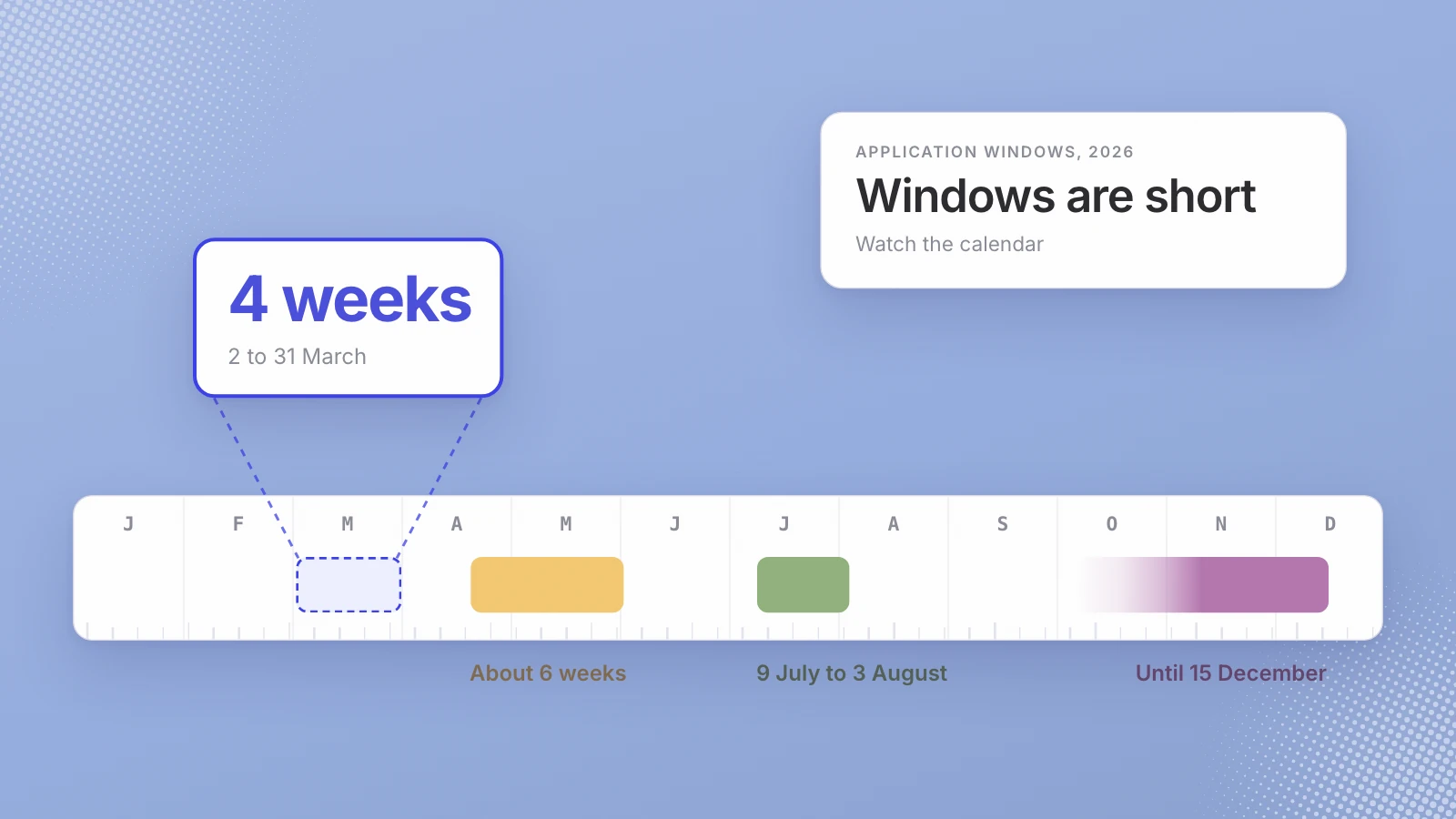
- Watch the calendar. Windows are short: 4 weeks for Sephora in 2026, about 6 for USBC 360.
What do accelerator applications ask for?
More proof than paperwork. Across the 2026 forms and FAQs:
- Traction. USBC 360’s FAQ lists “evidence of real demand” first; Ulta’s 2026 form asks for revenue, your direct-to-consumer launch date and your retail footprint.
- A video. Sephora asks you to “show us your personality with a short video”; Ulta’s form takes a hosted video link.
- An audience. Ulta’s form makes Instagram followers a required field, and Sephora asks about “real buzz from customers and fans.”
- The product in hand. Sephora may ask for samples; Open Call wants up to 3 published products on RangeMe.
No program publishes a follower threshold. What they ask for is evidence that real customers want the product, and a look at the founder who will be in the room. What retail buyers look for on your social media covers what counts as proof.
Where the demand and the video can come from
This is where Leo AI has a commercial interest, so I’ll be specific: we have no relationship with any retailer here and can’t get you into a program. Leo for consumer brands helps with the demand you point to. It turns footage you already own into captioned daily posts, and runs creator campaigns that look for the creators your buyers follow; FitCommit’s found 124 creators, and 17 said yes. Our launch studio cuts a 30 to 45 second product video from your footage for $500 in 5 working days. That is a product film, not the founder video Sephora asks for; film that one yourself, in your own words.
If a window opens in the next few months, start on the evidence now. Tell us who buys from you and we’ll show you the creators they follow, so the next form you fill in has more behind it than a follower count.
Every program here asks the same question in a different form: who already wants this?
Sources
- Target Accelerators, Frequently asked questions
- Target Accelerators, Target Takeoff
- Target, How Target supports emerging businesses and founders
- Target Accelerators, Meet the Target Takeoff Summer 2026 cohort
- Target Accelerators, Programs
- Target Accelerators, Meet Target Forward Founders 2025
- CNBC, As Target and other retailers drop DEI programs, Black founders could face tougher battle
- U.S. Black Chambers, USBC 360
- U.S. Black Chambers, USBC 360 frequently asked questions
- Walmart, Walmart Start
- Walmart, Put a spring in your routine with Walmart Beauty’s latest brand additions
- Walmart, FAQ: Open Call
- Walmart, Walmart’s 13th annual Open Call
- Sephora Accelerate, Frequently asked questions
- Sephora, Sephora Accelerate announces 2026 cohort of emerging beauty founders
- Sephora, 2026 applications open for Sephora Accelerate
- Ulta Beauty, MUSE Accelerator
- Ulta Beauty, Ulta Beauty announces 2026 MUSE Accelerator cohort
- Ulta Beauty, MUSE Accelerator 2026 application form
- Beauty Independent, Ulta Beauty selects eight emerging brands for fifth MUSE Accelerator cohort
- Whole Foods Market, Whole Foods Market opens applications for its 2026 LEAP
- Whole Foods Market, Whole Foods Market unveils the 2026 LEAP Early Growth cohort
- The Kroger Co., Go Fresh & Local Supplier Accelerator
- The Kroger Co., Kroger announces second annual Go Fresh & Local cohort
- The Home Depot, The Home Depot continues its connections with U.S. small business suppliers
Written by Lera Leonteva. Leo AI makes social video and runs creator campaigns for consumer brands, so we have a commercial interest in the last section of this comparison, and no relationship with any retailer in it. Program facts are from each retailer’s or organizer’s own pages, read 11 November 2026.