
For a 30 to 45 second launch video, Voice123 publishes $50 to $200 for a non-broadcast read under a minute, and paid ads add a usage fee. A self-serve AI voice with a commercial licence costs $5 to $6 a month and re-reads a line in under a minute. Hire a person for a founder’s story, an emotional piece or a language you can’t check.
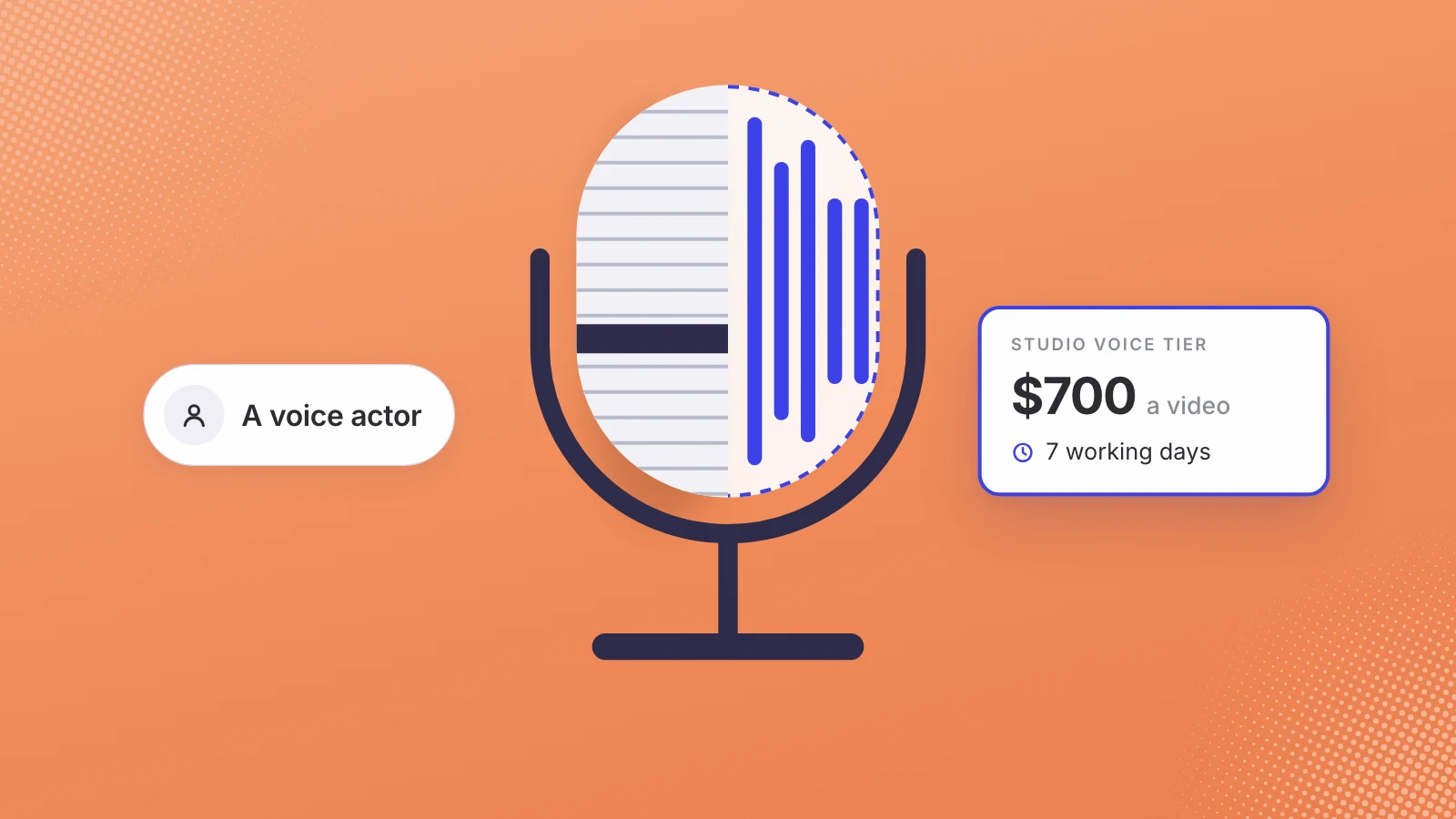
A 30 to 45 second launch video carries only a few sentences of voiceover. Whether a person or a model reads them changes the bill, the schedule, and what happens when a line changes the night before launch. I compared the two using only rates the marketplaces publish themselves, read on 30 October 2026.
The first read is the smallest part of the bill. Paid-ad usage and late changes are where the two routes split.
How much does a voice actor cost for a launch video?
Voice-over is priced on two things: how long the finished audio is, and where it will be used. Voices.com, one of the large marketplaces, describes non-broadcast work (training videos, explainers, podcasts) as “typically priced per word or per finished minute”, and broadcast work as “anything with paid promotion behind it, TV, radio or online ads”, priced on where it airs, how long it runs and on what platform. Here is what three marketplaces publish:
| Marketplace | Published figure | What it leaves out |
|---|---|---|
| Voice123 rate calculator | $50 to $200 for up to 1 finished minute (150 words or less), non-union, non-broadcast | Usage fees, studio time and session length |
| Fiverr voice-over category | Featured gigs from $9 to $36 | Commercial use is a licence you buy, with a one-year option |
| Voices.com rates page | No talent fees listed; a 4% to 6% processing fee on top | The talent fee, which each actor sets |
A launch video sits in Voice123’s shortest band. Voice123 says its ranges are “based on actual figures quoted by voice actors on the platform”. On Fiverr, the figure on a gig card is where that gig starts, and Fiverr sells a separate Commercial Use License for advertising and other business use, so check what the gig you pick includes. The GVAA Rate Guide, which Voices.com points clients to, now sits behind a sign-up form, so I haven’t quoted it.
That is the voice alone. For what the whole video costs through an agency, a freelancer or a studio, see what a product launch video costs.
Do you pay a voice actor more if the video runs as an ad?
Usually, and this is the line that grows. Voices.com classes voice-over for a digital ad as broadcast, priced on “the broadcast category, market and time period you specify” (its online ad page). Voice123’s guidance to its own voice actors calls the common usage terms, “13-week, 6-months, and 1 year”, buyouts, while non-broadcast work is “usually in-perpetuity (forever) by nature”.
In practice, a read bought for your website and organic posts can need a usage fee before it goes into paid ads, and a renewal when the term ends. Ask for the ad usage in the first quote: name the platforms, the countries and how many weeks the ads will run.
How much does an AI voiceover cost?
A self-serve AI voice with a commercial licence is a monthly plan. On 30 October 2026, ElevenLabs listed Starter, its first plan with a commercial licence, at $6 a month; Cartesia listed Pro at $5 a month; and Speechify listed Studio Starter at $100 a year. Those are the vendors’ own list prices. What their free plans forbid, and what the paid ones allow, is in can you use an AI voice in ads.
The plan buys the voice, not the work. You still write the script for the ear, audition voices on it, fix the words the model reads wrong, set the level under the music and export each size. The writing side is in how to make an AI voice sound human. The other route is to hand the whole job to a studio such as our launch video studio, where the voice is part of the edit rather than a separate purchase.
AI voice vs voice actor, side by side
| Voice actor | AI voice, self-serve | |
|---|---|---|
| The read | $50 to $200 for up to a minute, non-broadcast (Voice123) | A monthly plan: $5 (Cartesia Pro) or $6 (ElevenLabs Starter) |
| Paid ads | A usage fee set by market, platform and term | Covered by the paid plan’s licence; labelled where a platform asks |
| First read | Post the job, hear auditions, book the actor | Generated in 2.0 to 39.4 seconds in our test |
| A changed line | A pickup or re-read, often charged as an extra | Generated again, within your plan’s credits |
| Another language | Cast a speaker of that language | Same tool, but someone fluent has to check it |
Turnaround: casting versus generating
A human read starts with casting. On Voice123 you post the project and listen to custom auditions, and its rates page says you can get replies from voice actors in minutes. Then the actor records, edits and delivers. None of the rate pages I read gives a standard delivery time, so ask for one with the quote.
An AI read is generated, not cast. When we sent one 101-word launch script to six Google voices, each read came back in 2.0 to 39.4 seconds (the full test). The time goes into choosing a voice and fixing mispronounced words, not into waiting.
Revisions: a re-record versus a re-generate
This is the difference you feel most in launch week, when the price, a feature name or the date changes late. With a voice actor, a changed line means a new recording that should match the sound of the first session. Voice123’s advice to its voice actors lists “revisions, pickups, copywriting, translation, re-reads” among services that come “at an additional cost”.
With an AI voice, you generate the line again, as many times as you need. I’d regenerate the whole paragraph around a changed line rather than splice in one sentence, so the pace stays even across the cut.
What about other languages?
Voices.com says its talent covers over 100 languages, accents and dialects. AI voices cover many languages too, but read the small print: OpenAI’s speech guide says its model follows Whisper’s language support, with “voices being optimized for English”. If nobody on your team speaks the language, nobody can hear whether the read got a product term, the register or a local phrase wrong.
When is a human voice actor the better call?
Sometimes, and it is worth being honest about when. An AI voice suits a short feature launch whose script will keep changing. I’d hire a person, or record the founder, in these cases:
- A founder telling their own story. If the video is “why I built this”, the founder’s own voice is the point, and a synthetic stand-in undercuts it.
- An emotional brand piece. If the video has to move people rather than explain a feature, pay for a performer you can direct take by take.
- A language you can’t check yourself. Hire a native speaker, or at least have one approve the AI read before it ships.
- A voice that has to become the brand. A stock AI voice is open to everyone else on the same tool (why AI voiceovers sound the same). If one voice will carry every ad for years, cast a person and agree the usage term up front.
If you’ve chosen AI but don’t want to do the voice work yourself, that is what our $700 launch cut with a realistic voice is for. We write the script with you, three realistic AI voices read it, you pick one or ask for another read, and the finished video arrives in 7 working days. Hear the three sample voices. Another language, with its own voice and captions, is a $150 add-on, and voice and music are cleared for posts and paid ads, so the price doesn’t change when the video becomes an ad. Everything else is on the launch video pricing page.
Hire a person when the voice is the message. Use AI when the words are.
Sources
- Voice123, Voice over rates calculator
- Voice123, What you need to know when setting successful voice over rates
- Voices.com, Voice over rate guide
- Voices.com, Online ad voice actors
- Fiverr, Voice over category
- Fiverr Help Center, “For Commercial Use” license details
- Global Voice Acting Academy, GVAA Rate Guide
- ElevenLabs, Pricing
- Cartesia, Pricing
- Speechify, Studio pricing
- OpenAI, Text to speech guide
Written by Lera Leonteva. Prices and rules change; each one is linked to its own page, read October 2026.