
To get your product into Walmart stores, register as a supplier on Walmart’s site, complete onboarding in Supplier One, then wait for a merchant’s invitation to an agreement; Walmart says registering doesn’t guarantee business. To sell on Walmart.com instead, apply to Walmart Marketplace, which is free to join and takes a referral fee per sale. Open Call is the side door for U.S.-made products.
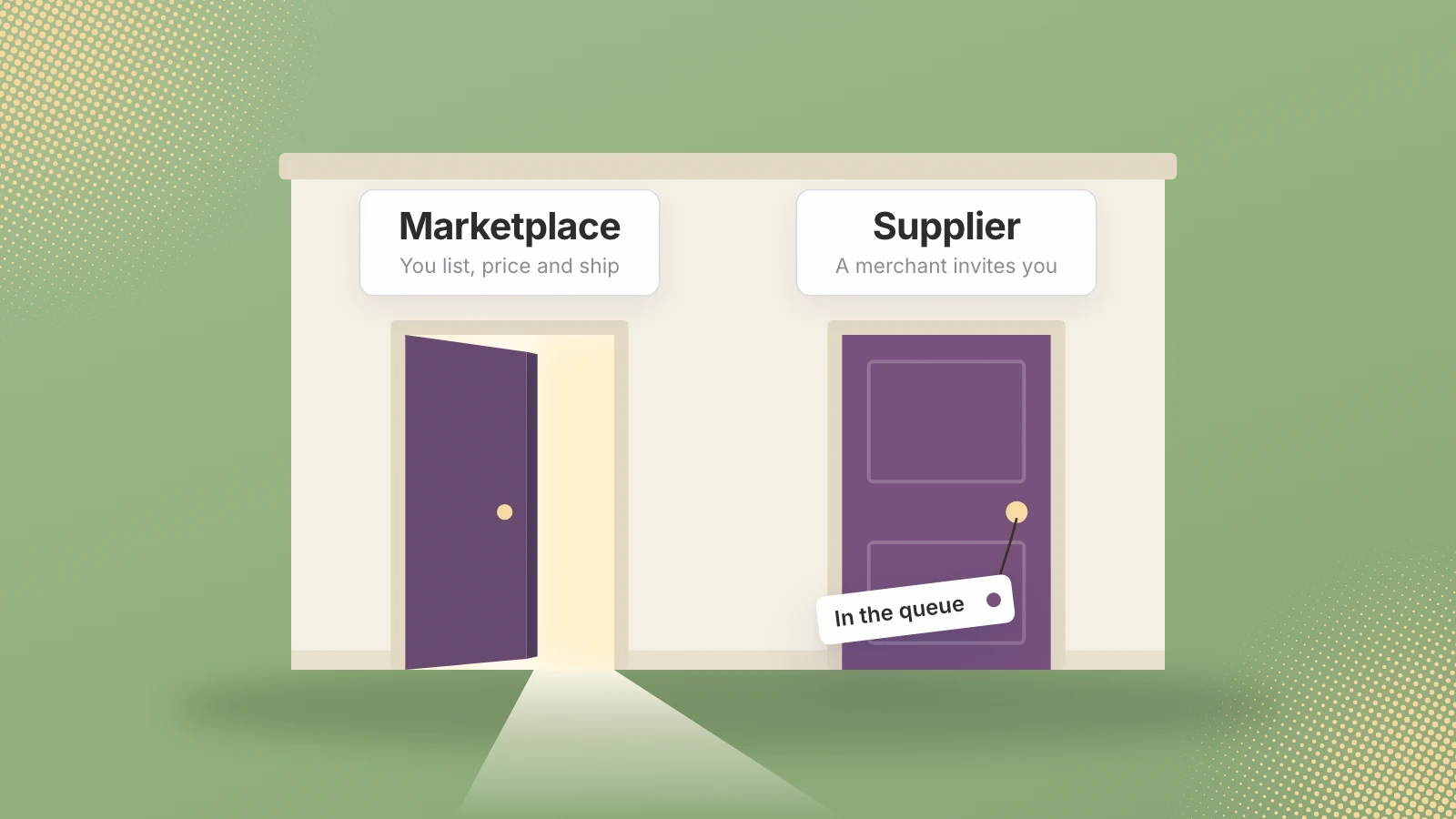
There are two ways to get your product into Walmart, and they lead to different businesses. On Walmart Marketplace you are a third-party seller on Walmart.com: you list, price and ship. As a supplier, Walmart buys from you and sells your product in its stores, on Walmart.com or at Sam’s Club. Walmart’s suppliers page lists both doors, plus private brands and services. I read Walmart’s supplier, onboarding and Marketplace pages on 11 November 2026, and this is what they say. Whether Walmart should be your first retailer at all is a separate question, and our founder’s guide to retail starts there.
Anyone can register. Being chosen is up to a merchant, and Walmart says so in writing.
Should you sell on Walmart Marketplace or to Walmart stores?
You can do both, in either order; Walmart notes that “many suppliers use Marketplace to complement their broader Walmart business.” The differences, from Walmart’s own pages:
| Walmart Marketplace | Walmart supplier | |
|---|---|---|
| Who sells to the shopper | You, as a third-party seller on Walmart.com | Walmart, which buys from you for stores, Walmart.com or Sam’s Club |
| How you start | An online application, then business verification | Self-registration, then a merchant invites you to an agreement |
| Who decides | Walmart checks your business and catalog | A Walmart merchant picks your product |
| Who ships | You, or Walmart Fulfillment Services | You or Walmart’s carriers, in Walmart’s delivery windows, scored on time and in full |
How do you become a Walmart supplier?
Walmart’s apply page asks U.S. businesses to complete its application process and warns that “self-registering your company does not guarantee you will be extended an agreement.” The steps, from Walmart’s onboarding checklist and help pages:
- Get your identifiers in order. A federal tax ID, a Dun & Bradstreet (DUNS) number and a GS1 company prefix. Your legal name must match in D&B and IRS records “letter-for-letter,” Walmart’s help pages say, or setup stops.
- Create an account. The apply page sends you to the Retail Link login to register; onboarding then runs on a dashboard in Supplier One.
- Complete the onboarding tiles. Company and tax details, a product catalog (up to 200 items per upload), contacts, insurance, EDI, banking, logistics and acknowledgments, plus the Master Supplier Agreement.
- Wait in the queue. Walmart’s onboarding FAQ is candid: “Your registration will remain in a queue for buyers to review. If they are interested in your product, they will send you an invitation to start the Walmart agreement process.”
- Accept the Business Terms Agreement. Only a merchant can send it, and Walmart notes that accepting the agreements “is not a guarantee of business.”
What is Walmart Supplier One?
It is Walmart’s supplier portal. Walmart’s help pages say a net-new supplier will “complete the onboarding tasks from the dashboard within Supplier One,” and you sign in with your Retail Link email and password. After onboarding, the same portal shows your purchase orders, item setup, payments, deductions and on-time scores.
How do you get a Walmart vendor number?
You don’t apply for one; it comes with an agreement. Walmart’s checklist says that once your profile reaches “agreement ready,” merchants interested in your product can send an invitation, and that suppliers in that status “do not have a guarantee of business.” The 6-digit supplier number and 9-digit agreement number appear after the agreement step. With the 6-digit number and one item set up, you graduate from onboarding to full Retail Link access. Walmart’s help pages use vendor number and supplier number for the same account.
What does Walmart require from suppliers?
Walmart’s supplier requirements page lists:
- A federal tax ID on every U.S. supplier’s application; non-U.S. suppliers provide a W-8.
- A Dun & Bradstreet listing. Walmart notes that D&B doesn’t charge to update it.
- A GS1 company prefix, which gives your items their GTIN/UPCs; GS1 charges an initial and a yearly fee based on how many items you have.
- Insurance against claims related to your product. For its Walmart Start beauty accelerator, Walmart lists a minimum of $5 million in liability insurance, with the actual amount varying by business.
- Audits and testing where they apply: food safety, product safety, responsible sourcing and supply chain security.
- Packaging built for Walmart’s supply chain: cases that survive conveyor belts, correct labels, proper pallets and trailers loaded to specification.
Requirements vary by product. This is a summary of Walmart’s pages, not legal or insurance advice.
How do you sell on Walmart Marketplace?
Walmart says signing up is “completely free”; you pay a referral fee on each item sold. Its Marketplace guide lists what you need before you apply:
- A personal ID, plus a business tax ID or business license number (a Social Security number isn’t accepted)
- Documents that verify your business name and address
- A history of marketplace or e-commerce success
- Products with GS1 GTIN/UPC numbers, and a catalog that respects Walmart’s prohibited products policy
- A U.S. warehouse that handles returns, or Walmart Fulfillment Services
Referral fees depend on the category. Walmart’s fee schedule lists 15% for home, kitchen and pet items, and 8% for beauty items up to $10 or grocery items up to $15, rising to 15% above those prices. Walmart says Marketplace reaches more than 90 million unique visitors a month.
Is Walmart Open Call a faster way in?
It is a side door for products made, grown or assembled in the U.S. You apply through RangeMe, and selected founders pitch a Walmart or Sam’s Club merchant in a 30-minute meeting in Bentonville. At the 2026 event, Walmart says, nearly 150 entrepreneurs pitched and 54 left with golden tickets. Our Walmart Open Call guide has the timeline and a month-by-month plan.
What happens after your first purchase order?
You start being measured. Once you graduate from onboarding, Walmart’s checklist says, Supplier Academy opens courses on ordering, transportation, getting paid, packaging and compliance programs, including On Time In Full (OTIF). In February 2024, the Wall Street Journal reported, Walmart eased its targets to 90% on time and 95% in full, down from 98% for both since 2020. SPS Commerce, an EDI provider, says orders Walmart collects carry a 98% goal and that misses are fined 3% of the cost of goods on the cases that failed. Our guide to UPCs, EDI and chargebacks covers how to avoid them. Walmart also runs supplier finance programs it says can help eligible suppliers fund production and get paid sooner.
How do you get shoppers to find you at Walmart?
Walmart’s own programs build marketing into a launch. Walmart Start promises selected brands “select marketing efforts like campaigns on Walmart.com,” and Walmart Connect was among the growth businesses Walmart showed 2026 Open Call attendees. Our 90-day launch marketing plan covers retail media, and our guide to sell-through and velocity explains the numbers a buyer watches once you’re on the shelf.
The other lever is demand you build outside Walmart and point at your listing, and it’s the part we sell. Leo AI has no relationship with Walmart and doesn’t place products. Leo for consumer brands turns footage you already own into captioned daily posts, and on the Pro plan each post can carry click tracking in its first comment, so you can see which clips send people to your product page. It also runs creator campaigns aimed at the creators your buyers follow: FitCommit’s found 124 creators, and 17 said yes.
If you register this month, the queue is the part you can’t control. What a merchant finds when they look you up is the part you can. Tell us who buys from you and we’ll show you the creators they already follow, and what your existing footage could be posting while you wait.
Walmart decides who gets an agreement. You decide what a merchant sees when they look.
Sources
- Walmart, Suppliers
- Walmart, Apply to be a supplier
- Walmart, GFR supplier onboarding readiness checklist (PDF)
- Walmart Supplier One help, Supplier onboarding: FAQs
- Walmart Supplier One help, Supplier setup and maintenance
- Walmart Supplier One help, Getting started in Supplier One
- Walmart, Supplier requirements
- Walmart, Walmart Start
- Walmart Marketplace Learn, Before you start selling on Walmart Marketplace
- Walmart Marketplace Learn, Referral fee schedule for contract categories
- Walmart, Open Call FAQs
- Walmart, Walmart’s 13th annual Open Call
- The Wall Street Journal, Walmart eases supplier delivery demands as stocking pressures recede
- SPS Commerce, Retailer deductions in Q4: how Walmart and Kroger compare
Written by Lera Leonteva. Leo AI makes social video and runs creator campaigns for consumer brands, so we have a commercial interest in the marketing section of this guide, and no relationship with Walmart. Walmart facts are from Walmart’s own supplier, help and Marketplace pages, read 11 November 2026.