
Consumer insights for beverage brands come from pairing what drinkers do with why they do it. Pick one decision, read your own sales, reorders and reviews, then interview real buyers. Surveys count opinions, sales data shows behavior, and interviews, including AI-moderated ones that run overnight, explain the reasons. Check where every participant came from before you trust the answer.
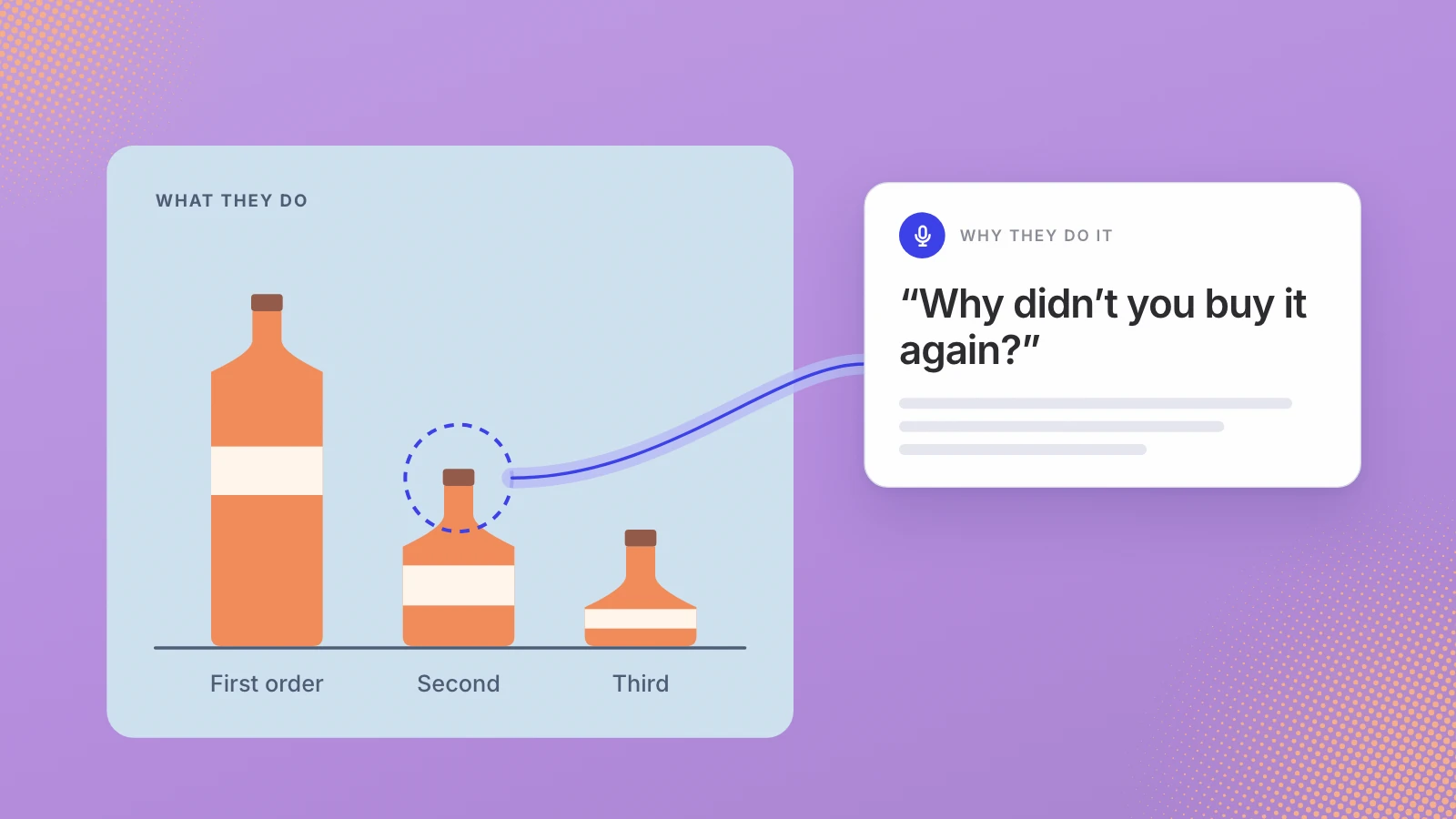
Consumer insights for beverage brands come from putting two things side by side: what drinkers do, in your sales and reorders, and why they do it, in their own words. For a small brand the cheapest way to get both is to pick one decision, read the data you already have, and then talk to real buyers before you spend money on a launch, a pitch or a print run.
Speed is the subject of a workshop next month. Strella, which sells AI-moderated interview software, is running one called “From Question to Consumer Insight, Overnight: A Live Study for Beverage Brands” at BevNET Live L.A. 2026, held from 6 to 8 December at the Marina del Rey Marriott, according to BevNET’s guide to the event. BevNET lists Ally Shirman and Arman Akhund from Strella’s growth team and Melissa Tovin from its marketing team among the workshop speakers. The preliminary agenda I read did not yet give the workshop a time or a room, and I don’t know what the live study will test. This post is how I’d approach the research either way, and what I’d watch for in the room.
Pick the decision first. The research method follows from it.
How do you do consumer research without a research budget?
Start with the decision, then use the cheapest source that can answer it. The Small Business Administration’s guide to market research splits the work in two: existing sources, which suit questions that are “both general and quantifiable,” and going direct to consumers through surveys, questionnaires, focus groups and in-depth interviews. It warns that direct research “can be time consuming and expensive,” so save it for questions about your own product and your own customers.
- Write down the one decision. A flavor name, a price, a front-of-pack claim, which retailer to pitch first. A study without a decision produces a deck nobody uses.
- Read what you already have. Orders and reorders from your own site, retailer reports, reviews, direct messages and notes from sampling days. They show what people do, and they cost nothing.
- Ask real buyers why. Short interviews with people who bought, and with people who tried once and did not come back. Write down the words they use; they are often better copy than yours.
- Change one thing, then measure again. Put the new name, price or claim in front of shoppers and compare it with the numbers you started with.
Sampling counts as research if you write things down. Seth Goldman, who co-founded Honest Tea, wrote in a 2021 post on Just Ice Tea’s site that “online surveys and focus groups can be directional,” but “the most effective way to learn from people is by engaging them in sampling and conversation.” When Honest Tea described itself as “Barely Sweetened,” shoppers at his demos wanted to know how you sweeten a drink with barley, so the brand switched to “Just a Tad Sweet,” which he says was “much easier to understand.”
Interviews, surveys and sales data: what each tells you
Each method answers a different question, and none answers all three you care about: who buys, how often, and why. Circana, the retail data company, describes consumer loyalty insights as understandings of “how and why consumers engage with brands over time,” drawn from sources “such as receipt panels and surveys,” and splits the journey into trial, repeat, habit and advocacy. Knowing which stage your question is about tells you which method to use.
| Method | What it tells you | What it can’t tell you | Best for |
|---|---|---|---|
| Sales data (your site, retailer reports, syndicated data) | What people bought, where and how often | Why they bought, or why they stopped | Finding where repeat drops off |
| Surveys | How many people hold a view | Anything you didn’t think to ask | Choosing between options you already have |
| Interviews, in person or AI-moderated | Why people choose, in their own words | How common a view is across all shoppers | Names, claims and reasons for switching |
| Sampling and demos | First reactions to taste and wording | What happens at home a week later | Testing how you describe the product |
Check where survey and interview participants come from. In an August 2026 study, Pew Research Center planted trap questions in an online opt-in survey: 10% of respondents said they had visited the International Space Station, and 18% answered yes to at least one trap and were flagged as bogus. Pew describes these as “survey-takers who make no effort to answer questions truthfully,” and concludes that screening helps but “a surefire solution remains elusive.” Your own customers are much harder to fake. For reading the sales side, our guide to sell-through and velocity has the formulas.
What are AI-moderated interviews, and where do they fit?
An AI-moderated interview is a one-on-one interview in which software asks the questions, listens to the answer and follows up, so hundreds can run at the same time. Strella’s page for consumer brands calls AI moderation “a new research methodology” that “brings the depth of a one-on-one interview to hundreds of consumers at once.” Its headline is “Run 100 consumer interviews by tomorrow morning,” with participants drawn from your own customers or from panel partners it puts at more than 100 million people in more than 46 languages.
The company claims 90% time saved against manual qualitative research and 70% cost saved against a focus group. Those are its own figures, and the page lists no prices. Its October newsletter, describing a conference talk with Cint, one of its panel partners, adds that AI-moderated interviews “tend to run shorter (the AI moderator talks less),” while “open-ended responses are getting longer, not shorter.”
Where I think they fit: questions whose answers are words. Which of three names sounds like a drink you’d buy, which claim people believe, why someone switched from a competitor, what a flavor reminds them of. Strella lists concept testing, “Claims & packaging” and flavor ideas among its uses. Where I’d still put the liquid in someone’s hand is taste itself: sweetness, mouthfeel and aftertaste are things a screen can ask about but cannot deliver.
How do you turn insights into a launch, pitch or retailer story?
Lead with what shoppers do, then show why, in their words. NIQ made the case in a 2019 guide for small manufacturers that is older than I’d like but still holds: consumer insights help with the product and the price, but “they can be most impactful in a retail buyer meeting or a line review.” Its example of the argument that lands: “Increased visit frequency multiplied by increased spend per visit is the kind of math your retail buyers like to hear.”
I’d turn any study into one page with five parts:
- Who buys: the two or three kinds of buyer you actually have, from your data.
- How often: first orders, reorders and where repeat drops off.
- Why: three short quotes in buyers’ own words.
- What changed: the one thing you altered because of it, and what happened next.
- What you still don’t know, said plainly.
That page sits behind your sell sheet and buyer deck, and the same quotes can shape the copy for your first 90 days on shelf. The words shoppers use are usually better than the words founders use.
What to watch for in Strella’s live study
A live study is also a demo, so watch the method as closely as the result. If I were in the room, these are the questions I’d bring:
- Where do the participants come from, and how are fake or careless respondents screened out?
- What does the AI moderator do when an answer surprises it: follow up, or move on?
- Can you open the interview behind each theme and check the quote yourself?
- How many interviews does a launch question need before the themes stop changing?
- What does the smallest useful study cost, since the page lists no prices?
- Which questions should stay with a human researcher?
BevNET’s guide says registered attendees can also request 10-minute meetings with retail buyers and investors on 7 and 8 December, so research done before the event can go straight into those conversations. Agendas change, so check BevNET’s agenda page for the workshop’s time before you go.
Where Leo fits
I run Leo, so weigh this section accordingly. Leo doesn’t do consumer research, and I wouldn’t sell it as a substitute for talking to buyers. It works on the other half of the problem: once you know what to say, saying it often enough to be seen. Leo for consumer brands indexes footage you already own, such as founder talks, sampling days and booth footage, finds the moments worth posting, cuts captioned vertical clips and schedules them. It also runs creator campaigns aimed at the creators your buyers follow.
On the Pro plan, each post can carry a tracked link in its first comment, so you can see which clips send people to your site. That isn’t a study, but it shows you, week after week, which message pulls.
If you’re going to Marina del Rey with a launch, a pitch or a buyer meeting coming up, write down the one decision you need help with before the workshop. And if what you learn changes the story you tell, tell us who buys from you and we’ll show you the creators your buyers follow, and how many posts are already sitting in your footage.
Sources
- BevNET, BevNET Live L.A. 2026 agenda (preliminary)
- BevNET, BevNET Live L.A. 2026 speakers
- BevNET, BevNET Live L.A. 2026 is less than 30 days away: your guide (November 2026)
- Strella, Verbatim, Issue 05: a very human issue (October 2026)
- Strella, AI consumer research for CPG and beverage brands
- U.S. Small Business Administration, Market research and competitive analysis
- Just Ice Tea, In search of a sales strategy, by Seth Goldman (October 2021)
- Pew Research Center, No easy fix for bogus respondents in online opt-in polls (August 2026)
- Circana, From trial to repeat: how consumer insights help growing brands build loyalty
- NIQ, Getting to know your consumer (April 2019)
- U.S. Bureau of Labor Statistics, Market research analysts, Occupational Outlook Handbook
- Circana, 2025 New Product Pacesetters: redefining innovation and consumer impact in CPG
- Circana, 4 surprising findings from Circana’s New Product Pacesetters
Written by Lera Leonteva. Leo AI makes social video and runs creator campaigns for consumer brands, so we have a commercial interest in the marketing part of this guide. Event and company facts are from their own pages, read November 2026.