
One eight-hour day of filming at a Wayo Community Workday produced 96 source clips and 26 minutes of usable footage. Indexed, that became 175 searchable scenes feeding 18 scheduled posts across Instagram and YouTube over 17 days, plus a 25-second hero film delivered the next morning. One person filmed it. Nobody stopped working.
In July I spent a day at The Wilson on West 27th Street, filming a community event for Wayo. No crew, no light kit, no shot list. I brought a phone, worked from a table like everyone else, and stayed for lunch.
This is what one day like that is actually worth, measured rather than estimated.
Who Wayo is, and why a room is their product
Wayo is the alternative to coworking in New York City. Instead of renting you a desk, they run curated Community Workdays in private venues, rooftops and hotels, and there are now more than 250 members, who call themselves Wayoers.
That distinction matters more than it sounds. A coworking company sells square footage, which is photographable any day of the week. Wayo sells a specific room, on a specific day, full of specific people. That is a much better product and a much harder thing to market, because the thing you are selling has already ended by the time anybody asks about it.
100% remote is quietly expensive for early teams. You lose the accidental conversations, the momentum, and the urgency that comes from other people building in the same room.
The thesis we heard all day, from members, unprompted
The problem with a business made of good days
Every community business we have worked with has the same gap. The experience is excellent and the evidence of it is thin. A few phone photos, maybe a group shot, and then the room empties and the proof goes with it.
Meanwhile the marketing calendar still wants three posts a week. So the team either posts stock-feeling filler, or posts nothing, and the best asset they own, a room full of the exact people their prospects want to be around, never leaves the building.
The fix is not more filming. It is making one day of filming findable enough to keep using.
Send one person, not a crew
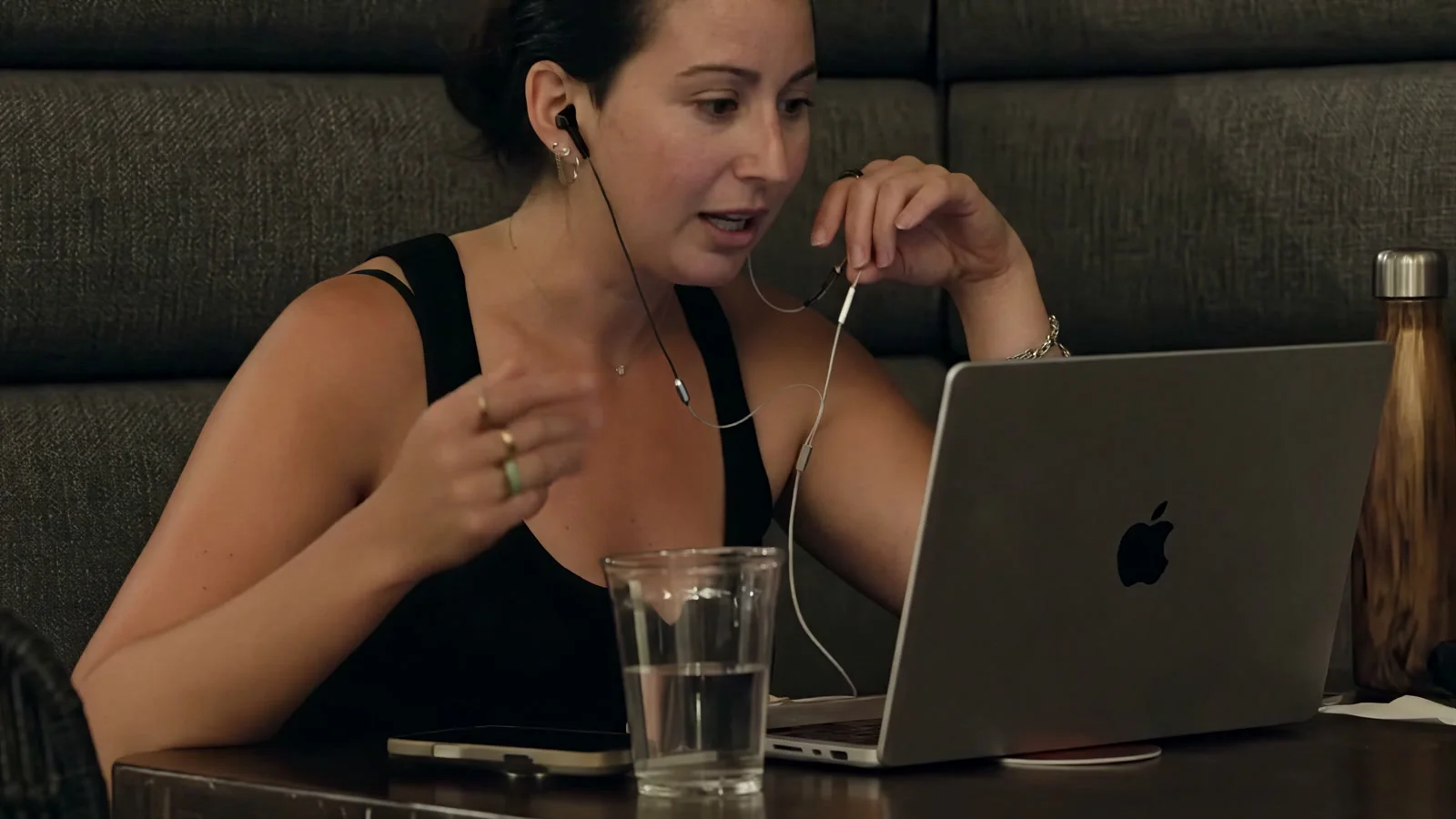
A camera crew changes how a room behaves, and a room behaving differently is exactly what you do not want when the room is the product. I worked from a table, joined conversations, and filmed between them.
The practical effect is that people stopped noticing within about twenty minutes. Most of the footage that made the final cut was captured after that point, which is why it looks like an event rather than like a shoot.
Shoot short and shoot wide
The instinct at an event is to record long takes. We did the opposite: 96 clips across the whole day, most of them under twenty seconds, covering the venue exterior, the room filling up, people working, the lunch service, and the conversations in between.
Short clips are worth more than long ones because they recombine. A 17-minute continuous recording is one asset. Ninety-six short ones are the raw material for hundreds of different cuts, and every scheduled post can draw from a different part of the day.
Total usable footage: 26 minutes. That is the entire input to everything below.
Index before you edit
This is the step most teams skip, and it is the one that decides whether the day is still useful in a month.
Raw footage is unusable at rest. A folder of files called MVI_7663 is a folder nobody opens again, because remembering what is inside it costs more than filming something new. So before any editing happened, every clip was broken into scenes, the speech transcribed, and the visuals described.
The day came out as 175 indexed scenes, of which 168 carry transcribed speech. From that point on, the day is searchable by meaning. "Someone explaining why they left their home office" is a query, not a scrubbing exercise.
One audience profile per channel
The same day of footage should not be cut the same way twice. We set up two channels from this one library, each with its own audience profile:
- Instagram, framed around coworking: remote workers, freelancers and small teams in New York looking for something better than a desk.
- YouTube, framed around workspace and dining: the space itself, the meeting rooms, the bar and restaurant, and the community around them.
Alongside that, the system mapped 83 comparable accounts across the two profiles, so topic selection is anchored to what this audience actually engages with rather than to what we assume about it.
Let the calendar pull from the library
Conventional workflow: decide the post, then hunt for footage that fits, then give up and use a stock clip. We run it the other way round. Each scheduled topic queries the indexed library and takes the scenes that genuinely match it.
Because the library was built from a real day, the topics that came back were the ones the room was actually about: remote work, flexible work arrangements, workspace aesthetics, professional networking, community events in NYC, workplace culture, career development.
None of those were briefed. They came out of the footage and the audience profiles together.
What the day produced
| Output | Amount | Note |
|---|---|---|
| Filming time | 1 day, 9am–5pm | One person, embedded, no crew |
| Source clips | 96 | 26 minutes of usable footage |
| Indexed scenes | 175 | 168 with transcribed speech |
| Channels built | 2 | Instagram and YouTube, separate audience profiles |
| Comparable accounts mapped | 83 | Anchors topic selection to the real audience |
| Hero film | 25 seconds | Eight shots, delivered next morning |
| Posts scheduled | 18 | Across a 17-day window, 14 already cut |
The hero cut went out on LinkedIn and Wayo shared it from their own channels. It also did something a post is not supposed to do on its own: Wayo added us to the trusted service provider directory they are building inside their community platform, and their social lead, who runs their Instagram and TikTok, asked to start using the tool herself.
That is the part worth underlining for anyone weighing up a day like this. The film was the deliverable. The relationship was the return.
What we would tell another community business
If you run events, dinners, workdays, meetups or conferences, you are already producing the hardest and most expensive input in content marketing: real people, in a real room, who chose to be there. You are just throwing it away at 5pm.
You do not need a production budget to stop doing that. You need one person in the room for one day, and a way to find the good thirty seconds again three weeks later.
Hi, I'm Zionna. This is Video Scaling Strategies, where each week we dive into the latest market trends and consumer behavior to understand what's fueling the growth of video content. If you run events and want this setup, the demo link is at the bottom of the page.
Frequently asked questions
How many social posts can you get from one day of filming?
In this case, one eight-hour day produced 96 source clips and 26 minutes of usable footage, which became 175 indexed scenes and 18 scheduled posts across Instagram and YouTube over a 17-day window. The limit is not how much you film, it is how findable the footage is afterwards.
Do you need a film crew to make content at an event?
No. We sent one person who worked alongside members for the full day and filmed on a phone. A crew changes how a room behaves, which is the opposite of what a community event needs on camera. One embedded person gets more honest footage and costs the host nothing in disruption.
What makes event footage reusable months later?
Indexing. Raw files named MVI_7663 are unusable a month later because nobody remembers what is in them. Once every clip is split into scenes with the speech transcribed and the visuals described, you can search the day by meaning rather than scrubbing through timelines.
Should the same footage be cut differently for Instagram and YouTube?
Yes. We ran two audience profiles from the same day: one built around coworking and flexible work for the short-form feed, and one built around workspace and dining for longer video. Same room, different framing, different clip selection.
How long does it take to get a finished film back from an event?
The hero cut from this workday was delivered the next day: 25 seconds, eight shots, one continuous voice-over from the host. The scheduled posts that draw on the same library keep publishing for weeks after that.
What does a coworking or community brand actually get out of filming a workday?
The product of a community business is a room full of people, and that room only exists for a few hours. Filming it converts a one-day, invitation-only experience into an asset that can be shown to everyone who was not there, for as long as the footage stays relevant.
Who is Wayo?
Wayo is a New York City membership community and an alternative to traditional coworking. Rather than renting desks, it runs curated Community Workdays in private venues, rooftops and hotels, with more than 250 members, known as Wayoers.