
Published UGC prices start at $89 to $99 a video on marketplaces like soona and Billo, and around $200 a video at a done-for-you agency like Feedbird. Collabstr’s 2026 data puts the average brands pay for UGC at $154. In FitCommit’s own creator campaign, one creator video cost 1/24 to 1/40 of an agency Reel at the same scale.
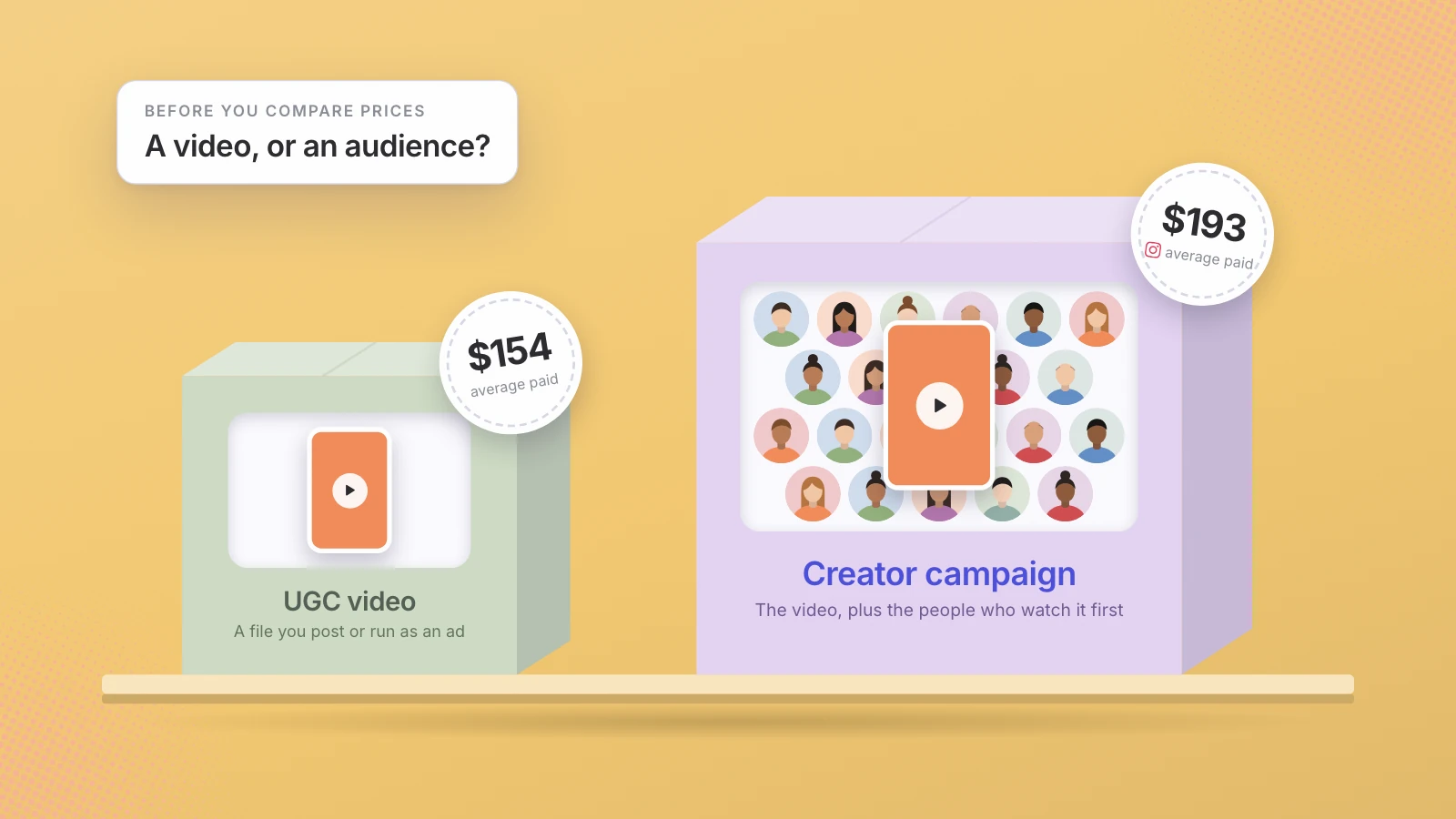
“UGC” and “creator campaign” get used as if they were the same thing, and the confusion makes quotes impossible to compare. A UGC video is a file: a creator films your product, you get the video, and you post it or run it as an ad. A creator campaign is distribution: the creator posts to their own followers, ideally people who look like your buyers. Some deals include both. The price of each is set by different things.
Before comparing prices, decide whether you are buying a video or an audience.
What does a UGC video cost in 2026?
Here is what three established UGC sellers publish on their own pages, from a self-serve marketplace to a done-for-you agency:
| Seller | Published price | What the price is for |
|---|---|---|
| Billo | From $99 a video | A 15-second video from a regular creator with basic editing |
| soona | $89 to $259 a video | Set by the creator level you choose |
| Feedbird | From $200 a video; 3 videos from $599 a month | Scripted, filmed and edited for you |
For a market-wide view, the marketplace Collabstr analyzed “472,000+ packages and 21,000 collaborations” for its 2026 Influencer Marketing Report. It found UGC creators list an average of $180, and brands pay an average of $154 once the deal is agreed. The average UGC campaign on its platform cost $197, and 80% of all engagements cost under $300.
So a single creator video, bought on its own, mostly sits between about $90 and $260. The range is wide because the unit isn’t the same from seller to seller.
What the price includes, and what it leaves out
- Length and creator tier. Billo’s $99 is for 15 seconds from a regular creator; it says the price rises for 30, 60, 90 or 120 seconds, a Premium creator, captions, expert editing, extra hooks or photos.
- Product and shipping. Billo says its price covers the creator’s fee, basic editing, the platform and transaction fees, but not your product or shipping it to the creator.
- Who writes the script. Feedbird’s price includes “custom scripts by a creative strategist”, editing with captions and hooks, and one round of revisions per video. On a marketplace, the brief is yours to write.
- Rights. soona says all content “includes an unlimited, worldwide license for all platforms and purposes”, and Feedbird lists full commercial rights. Check this line first on any quote, because a video you can’t run as an ad is worth less.
- Management. Billo sells a managed service, from $2,000 a month plus video costs, in which it sources creators, writes briefs, chases deliveries and edits the videos.
A creator campaign is a different purchase
When a creator posts your product to their own followers, you are paying partly for the audience. In Collabstr’s 2026 data, the average Instagram collaboration was paid $193, against $154 for UGC, and Instagram creators listed an average of $214. The difference buys the creator’s followers, and that is only worth paying for if they are your buyers. A creator with a big following of the wrong people is an expensive way to get a video file.
The real costs of a campaign are mostly time: finding creators who fit, writing to them, agreeing terms, briefing them, reviewing what comes back, and asking for fixes. An agency charges for that time. Running it yourself means doing it.
What running your own creator campaign involves
- Describe the buyer, not the creator. Who buys from you, what they follow, where they live. The creators come out of that, not the other way round.
- Find creators whose followers match. Follower count is the least useful filter. Look for an audience that overlaps with your buyers.
- Reach out where creators answer. In the FitCommit campaign, 22% of creators reached by email said yes, against 18% by X DM and 4% by Instagram DM.
- Agree terms and send a brief. Usage rights, posting dates, whether the post is a collab, and the points the video must make.
- Screen every video before anyone senior watches it. A checklist catches the fixable problems early. FitCommit’s creator portal checks each submission for a hook in the first seconds, clear voice, a call to action, the brand named, at least one app feature mentioned, royalty-free audio, and that it is vertical, in focus and well lit.
- Post, then measure what came back. Track visits and sign-ups per creator, not just views.
What one creator video cost in the FitCommit campaign
FitCommit is a fitness app that ran a creator campaign with Leo. The campaign found 124 creators, 17 of whom said yes, a 13.7% yes rate, with 1.43 million combined followers between them. One creator video cost 1/24 to 1/40 of an agency Reel at the same scale. The full numbers are on the creator campaigns page.
Read that ratio for what it is: one campaign, in one category, compared at matching scale. It is not a market rate, and your numbers will depend on your niche and how well the creators fit. What it does show is that the per-video price of creators you find and brief yourself can sit far below a produced agency Reel.
“The checklist and specific feedback on what to fix are useful. I could see us using this for FitCommit to cut down the back-and-forth on creator videos.”
David Cyrus, Founder & CEO, Attainment Labs
When a UGC agency is the better buy
An agency or a managed marketplace earns its fee in some situations, and I’d pick one if:
- You need ad creative this month and have nobody to manage creators.
- You want scripted ads with several hooks to test, not organic posts.
- You don’t need the creator’s audience, only the video.
- You would rather pay a known price per video than spend the hours.
When a creator campaign is the better buy
Run the campaign when the audience is the point: when you want people who already trust the creator to hear about you, and you want videos you can keep posting after. That is the work Leo for consumer brands does: it finds and vets creators, as it did for FitCommit, checks every submission in the creator portal before you review it, and cuts the footage you already own into scheduled posts. On the Pro plan, each post can carry click tracking in its first comment, so you can see which clips send people to your site.
If you are comparing a UGC quote with a creator campaign right now, start with the buyer. Tell us who buys from you on the consumer brands page and we’ll show you the creators they follow, so you can price both routes on the same footing.
A UGC agency sells you a video. A creator campaign sells you a video and the people who watch it first.
Sources
- Billo, Pricing
- soona, UGC content creation
- Feedbird, UGC videos
- Collabstr, Annual Influencer Marketing Report 2026
Written by Lera Leonteva. Leo AI runs creator campaigns for consumer brands, so we have a commercial interest in this comparison. Outside prices are from each company’s own page or Collabstr’s report, read 8 November 2026.