
B2B video keeps optimizing for polish because polish used to signal trust. It no longer does. Attention is scarce and unearned, so the job is to hook in the first three seconds, look like it belongs on the platform, and earn every second after that. Pick your format deliberately — it is the choice that drives your hook, your length and your cadence.
Hi, I'm Zionna. This is Video Scaling Strategies, where each week we dive into the latest market trends and consumer behavior to understand what's fueling the growth of video content.
Tech Is Having an Argument About Taste
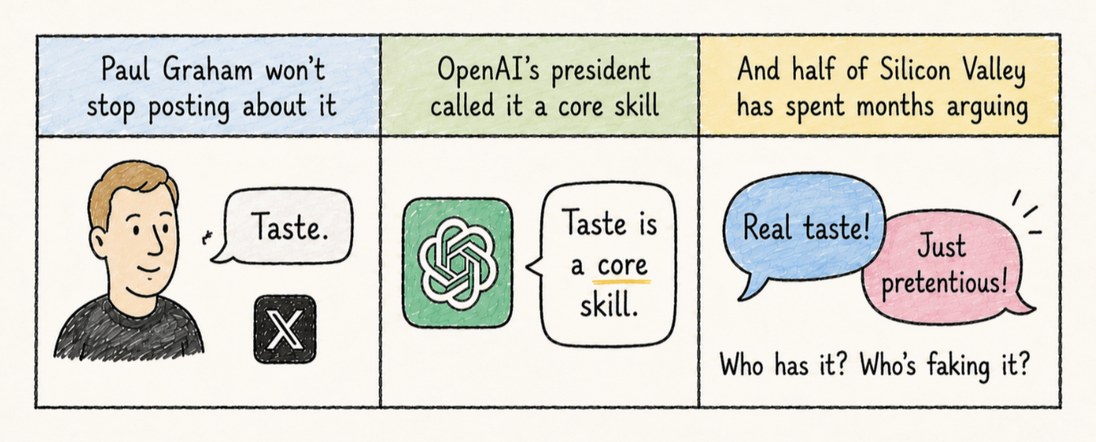
Everyone in tech is suddenly obsessed with “taste.” Paul Graham won't stop posting about it, OpenAI's president called it a core skill, and half of Silicon Valley has spent months arguing over who actually has it and who's just faking it. The logic goes: once AI can make anything, the real advantage isn't producing more, it's knowing what's actually worth making.
B2B Video Calls It Professionalism
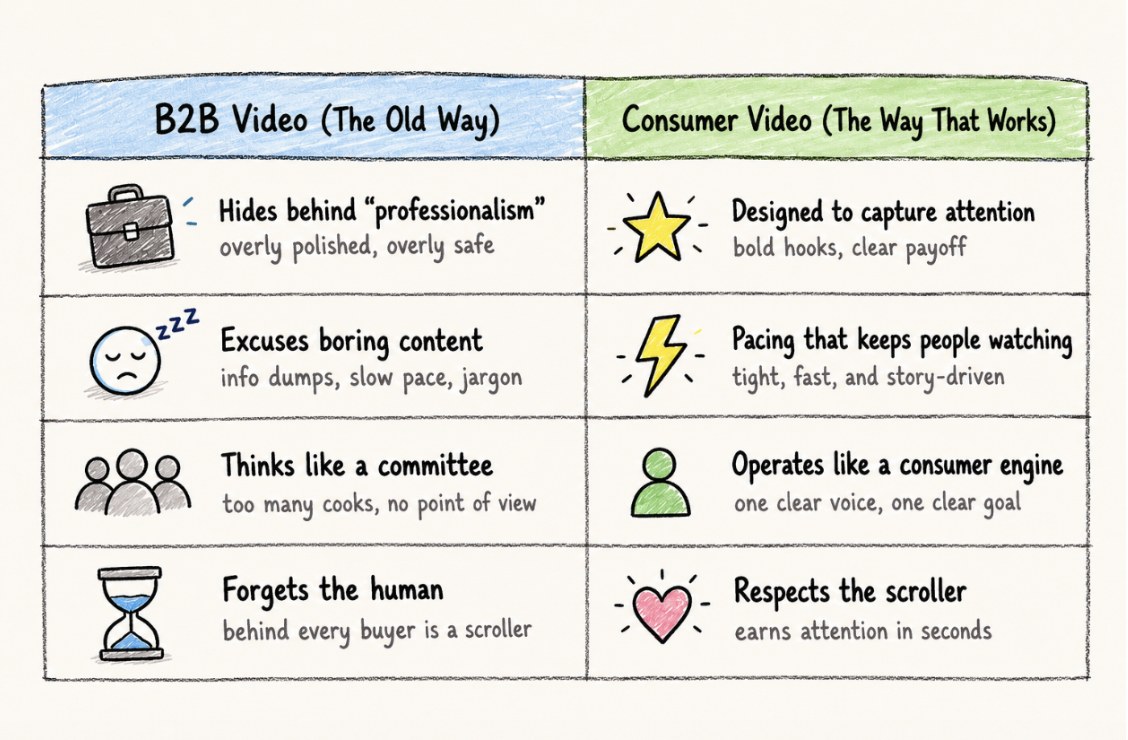
B2B video has the exact same problem, it's just been calling it “professionalism” instead of “taste”. Right now, nobody actually knows how B2B brands earn attention anymore. Is it through curation, someone with real taste deciding what's worth putting in front of people, or through something closer to continuously posting content until engagement is an exercise in data analytics? Honestly, one of the more interesting parts of this moment is that a ton of the “safe” assumptions about buyer behavior are just outdated.
Is tasteful actually the same thing as trustworthy, or is it just a nicer word for playing it safe? Do B2B audiences actually want the curated, ten-people-signed-off-on-it version, or do they just scroll past it? Are your professional and curated webinars corporate committees protecting the brand, or are they the reason nobody's watching?
Every Video Strategy Is an Educated Guess
Here's the thing: no matter what you do, you're essentially “guessing” on what attention is going to mean for B2B buyers going forward. Whatever video strategy you build reflects that “educated guess”, in your format, your platform, your pacing, your team.
So, what does a valuable piece of B2B content actually look like going forward? That's the question your video strategy should be built around.
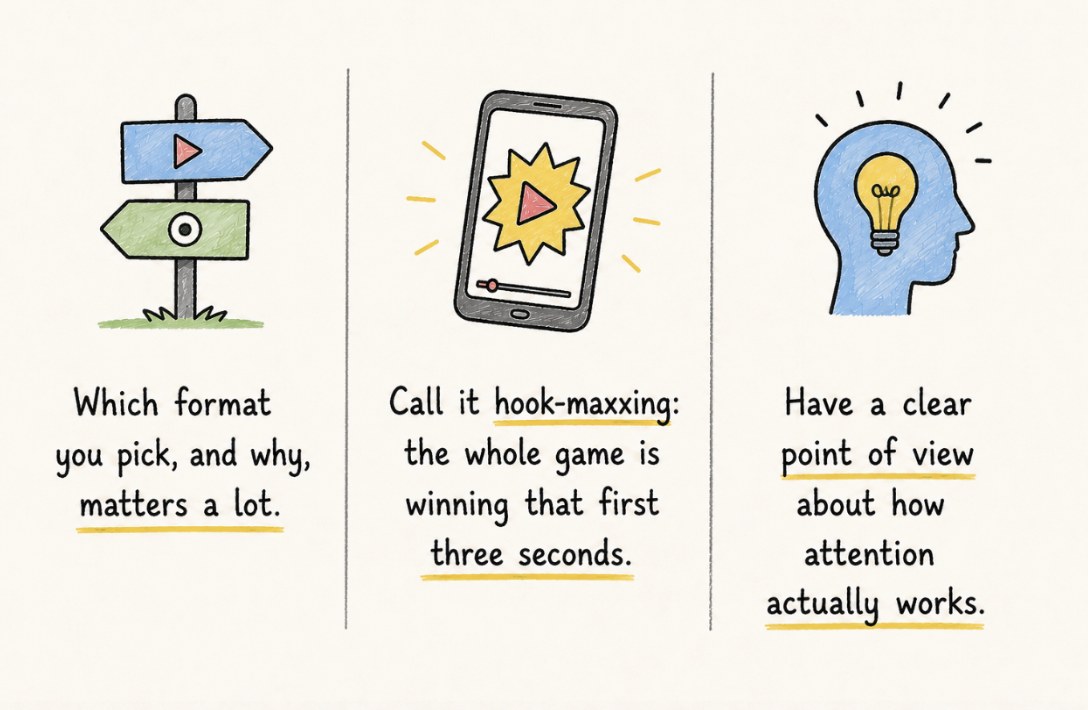
That's especially true for pacing and format, since those aren't just about what you can produce, they're about how your buyer actually receives it. They set the stage for the message you're trying to land and the trust you're trying to build. We've found that consistently good but less frequent video can still work, in the right context. But there is a path that tends to work better given how your buyers' attention has already been shaped by everything else they consume. Which format you pick, and why, matters a lot.
Hook-Maxxing: The First Three Seconds
Attention isn't loyal — especially with shorts — and slow doesn't read as trustworthy anymore.
A founder I talked to recently
Basically, old school B2B marketing is all about looking slow and polished and kind of distant because that's supposed to make you seem trustworthy. But the new way of doing things is the total opposite. Attention is scarce, so people won't give it to you for free. So you gotta hook people, make it feel like it actually belongs on the platform, and earn every single second after that instead of just assuming people will stick around. Call it hook-maxxing: the whole game is winning those first three seconds.
I don't think “professional” content is the wrong move — YouTube channels putting out the highest quality content (even infrequently) do extremely well, just take a look at Red Bull. However, you either need their marketing experience to know your audience well enough to invest that amount into every bit of content, or get very good at analytics, and learn quickly from each piece of content, honing in on what works for your audience as quickly as possible.
The point isn't whether that “educated guess” is fully right, I'd say it's whether it's heading in the right direction. Have a clear point of view about how attention actually works. It should drive every other choice in your video strategy: your hook, your length, your cutdown cadence, even who gets to greenlight the final edit.
Why This Is Harder for B2B Teams
This matters more for B2B teams than almost anyone else. Mostly because B2B marketers are at a disadvantage in exactly the places consumer marketers are strong. They're just not as used to how these platforms actually work, they struggle more to engage with buyers at an individual level, and their companies have no appetite to risk their budget on this content. It's hard for a B2B team to just say “we're going to make the boldest, punchiest video in our category.” So instead, they need to lean into the advantages they actually have, like depth, expertise, specificity, and pair that with a pace that doesn't lose people in the first five seconds.
Almost everything in B2B video comes down to a trade off between authority and attention. Making content that survives the feed means knowing exactly which corporate instincts you're actually willing to let go of.
That's content that scales.